Why we Need to Think Beyond Batteries

First published in the December 2025 issue of Quarry Management
The race towards zero-emission construction is on, and electrification is leading the way. But Mats Sköldberg, head of technology at Volvo Construction Equipment, says battery-electric machines alone will not be enough. To truly transform the industry, a mix of different technologies will be needed
The construction industry plays a vital role in society. It drives economic growth, creates jobs, and builds the infrastructure we all rely on. With growing populations and rapid urbanization, the demand for new homes, schools, offices, roads, bridges, and airports will continue to rise.
But the inescapable truth is that construction contributes around 16% of all CO2 emissions globally.
One size does not fit all
The opportunity to significantly reduce this carbon footprint lies in construction equipment, yet the complexity of the sector demands more than a one-size-fits-all solution. While some OEMs lean heavily towards battery-electric or hydrogen technologies, I believe a multi-technology approach is crucial.
Why? Because this is the only way to meet the different needs of customers depending on their specific segment, market, or geographical locations. By embracing this golden age of technology, we can better address these needs. Ignoring this would be a big mistake.
Battery-electric machines are certainly a critical part of the mix. They have already demonstrated their potential to cut CO2 and other harmful emissions such as NOx (nitric oxide and nitrogen dioxide) and particulate matter (PM) from our air, making them particularly beneficial in busy cities and low-emission zones. Their quieter operation and lower vibrations also make them ideal for cityscapes.
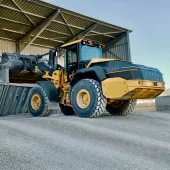
Initially, smaller compact battery-electric machines were the focus, as these were the simplest to transition. As battery technology advances and costs decrease, larger excavators, wheel loaders, and even articulated haulers are now available. These machines are being used successfully across diverse applications such as urban construction and large-scale building and demolition projects.
However, relying solely on battery-electric solutions risks leaving parts of our industry behind. They simply do not suit every customer, segment, or region across the world due to varying needs and different speeds of transformation.

Beyond battery-electric machines
Grid-connected machines are a practical alternative for static, repetitive tasks in sectors such as waste and recycling. They provide uninterrupted operation without the need for refuelling or recharging – a game-changer in high-intensity environments. Like battery-electric machines, they emit zero exhaust fumes and produce minimal noise, vibrations, and heat.
For some regions with limited grid capacity and charging infrastructure, electric solutions may not be the right power source. Here, hydrogen fuel-cells are a promising alternative that Volvo CE are exploring.
Unlike batteries that store their electricity, fuel-cells generate their own electricity onboard in an electrochemical process using stored hydrogen. By having a mix of both hydrogen and battery-electric options, we can better adapt to varying market and infrastructure capabilities. However, a lot of work is still required to unlock its full potential, such as advancing hydrogen infrastructure and securing reliable supplies of green hydrogen.
Whilst we know that zero-emission technologies such as battery electric and hydrogen fuel-cells will likely dominate the future of sustainable construction, internal combustion engines still have a role to play. But instead of diesel, these engines will run on renewable fuels such as biodiesel, HVO (hydrotreated vegetable oil), and even green hydrogen.
Advances in technology mean we will continue to make these engines even more efficient and productive than they already are. Hybrid machines are another immediate solution for customers seeking to reduce greenhouse gas emissions and advance towards their sustainability goals.
The transformation challenge
Addressing the construction sector’s carbon footprint is complex and goes far beyond the electrification of machines. We need a collaborative effort to advance the technology and infrastructure in tandem with supportive policies and incentives.
What is clear, is that by investing in diverse technologies, we offer solutions that address each customer’s unique needs today, while gearing up for the challenges of tomorrow. Importantly, this approach ensures no one is left behind in the journey towards a more sustainable industry. Debating the pros and cons of individual technologies and investing in one while ignoring the others denies us the chance to truly decarbonize.
Together, through innovation and collaboration, we can build a more sustainable and resilient industry that is fit to meet the demands of a changing world.
Subscribe to Quarry Management, the monthly journal for the mineral products industry, to read articles before they appear on Agg-Net.com